


For mothers-to-be
Pregnancy pantry
Simple, home-style staples for the months ahead: ragi, moong, seeds and dates that fit easily into everyday meals.
What's inside

From the farms of Maharashtra
Single-origin grains, flours and pulses — hand-pounded and stone-ground the traditional way, with lab reports you can read.
Hand-pounded Stone-ground Lab-tested Unpolished
Know your food
Scan the QR on your pack to see the farm, the harvest and the lab report for that very batch.
Farmer Village Harvest date Lab report

Everyday staples, each from the one place it grows best.

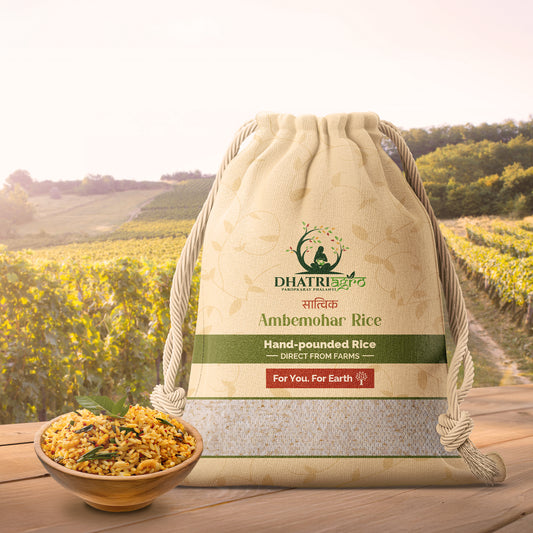

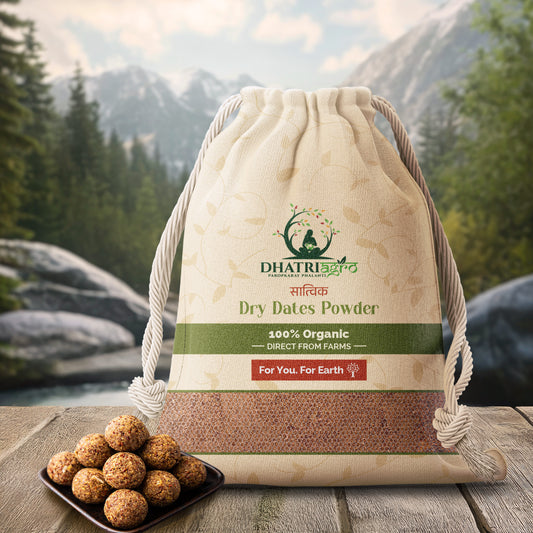

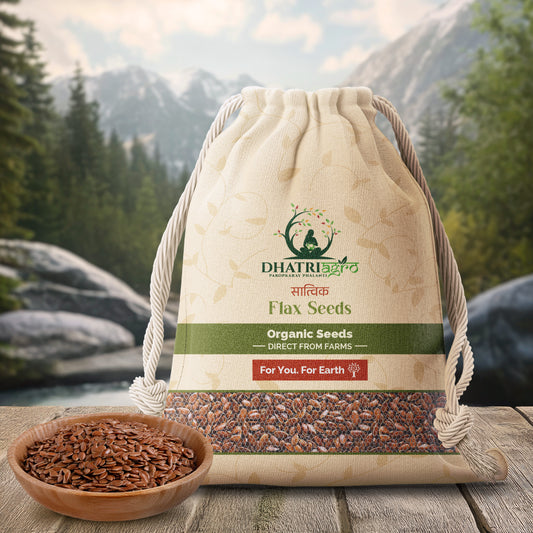

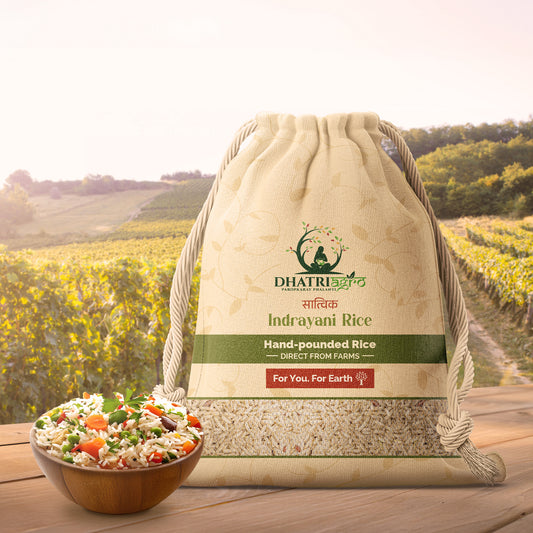

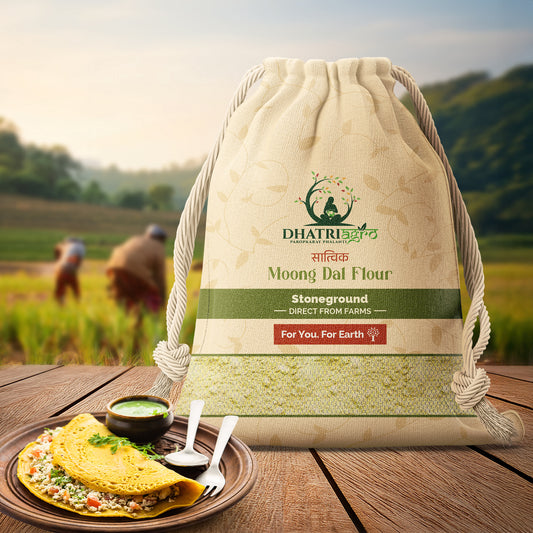

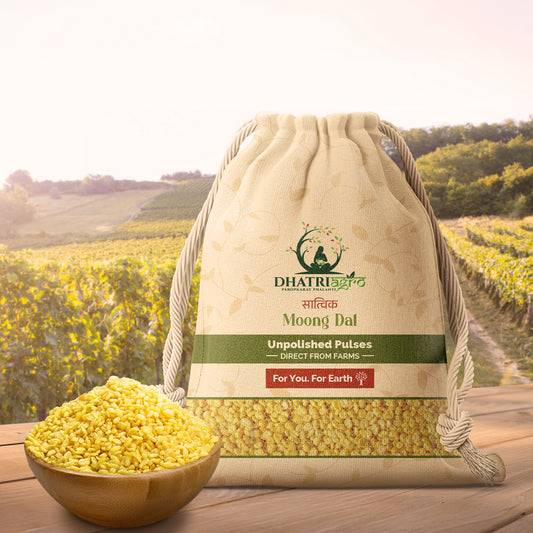


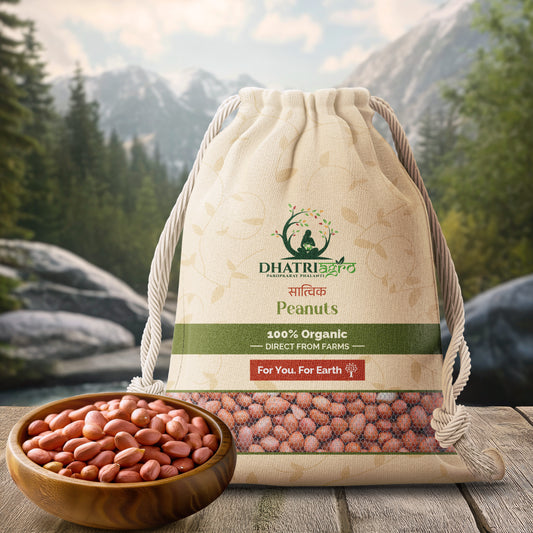

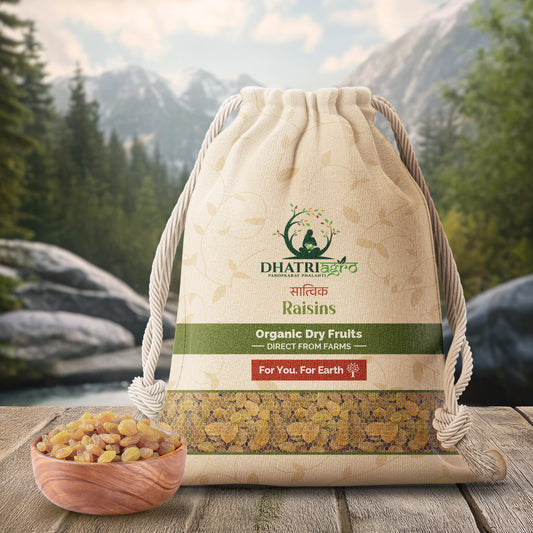

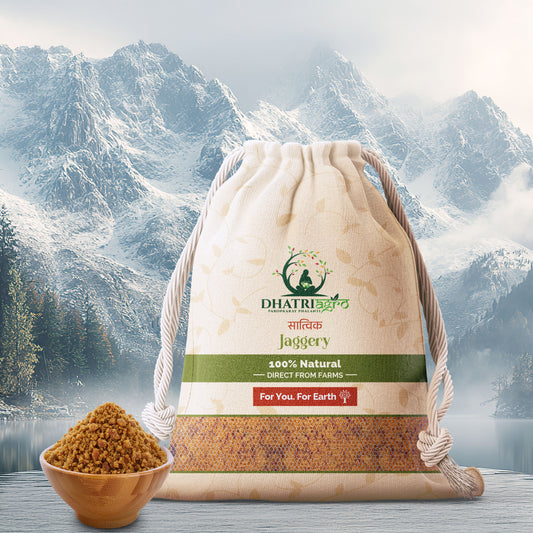

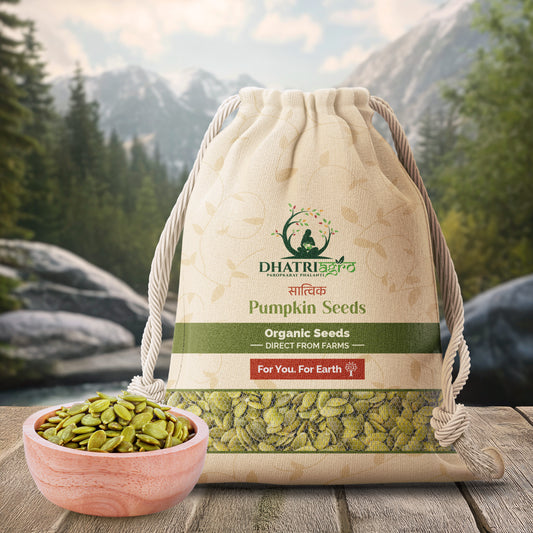

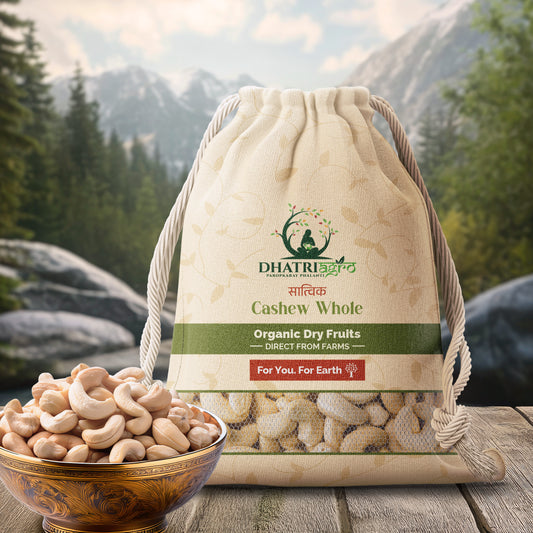


Our most-loved flour
Moong dal ground slowly on stone in small batches, so the flour stays fine, fragrant and whole. One bag, three family favourites:
Know your food
Scan the QR on your pack, or type the batch code printed beside it. See where it grew, when it was harvested, how it was processed — and the lab report for that very batch.
A real passport from our Moong Dal Flour batch. Live today on five products; more added every month.
Every promise links to the photos, videos and reports behind it.
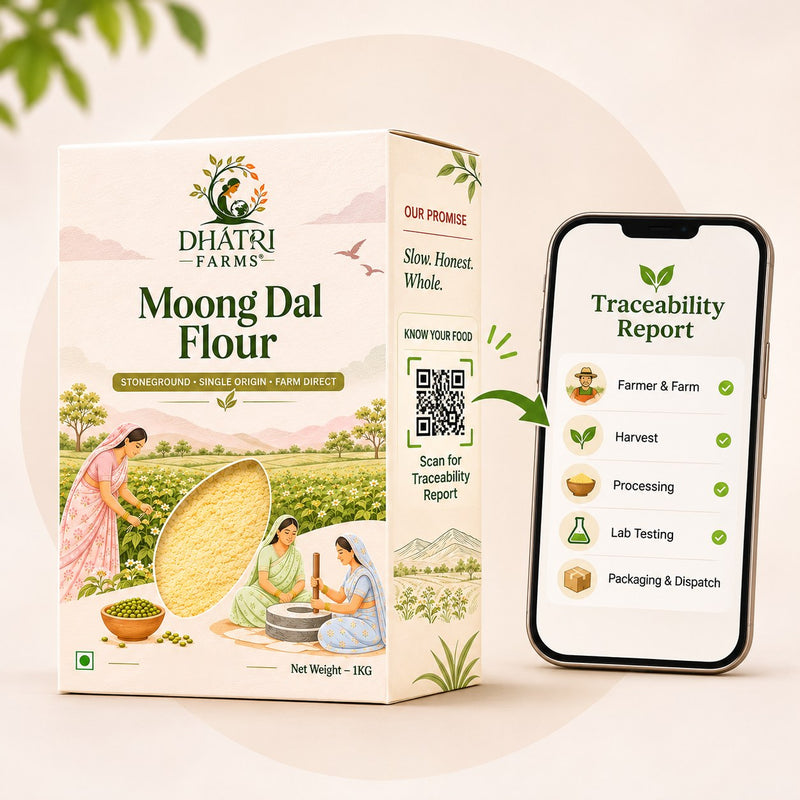
Which region, which variety, which harvest. Where we have it, the farmer's name too.
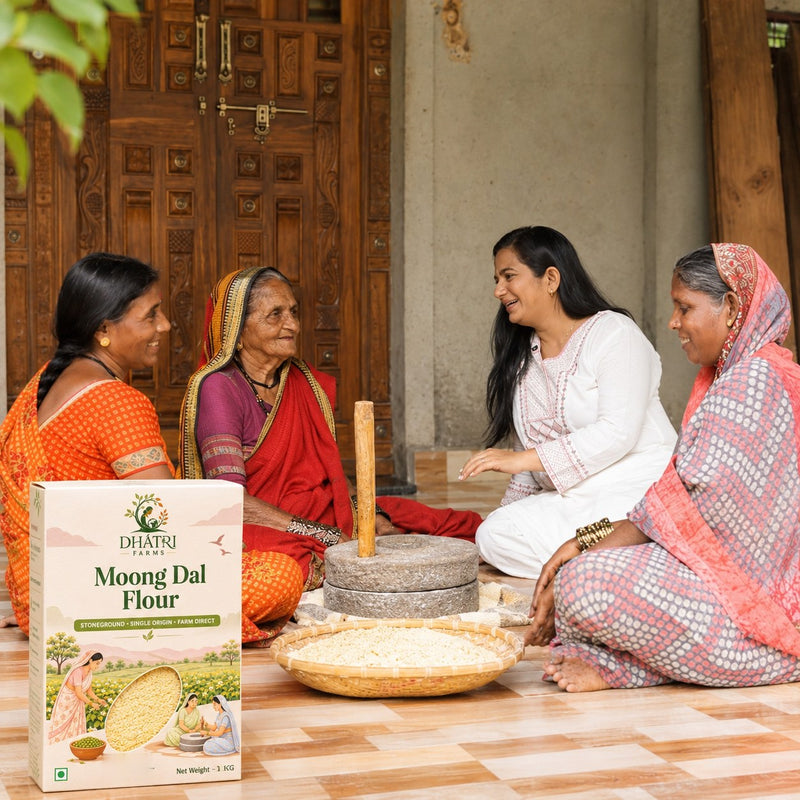
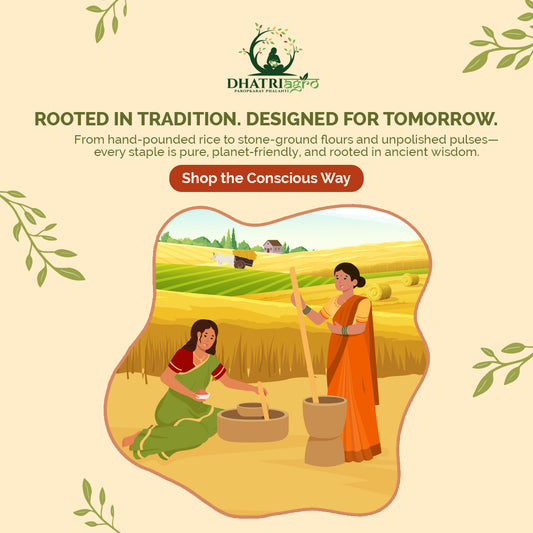
Rice pounded by hand, flour ground on stone, dals and rice left unpolished.
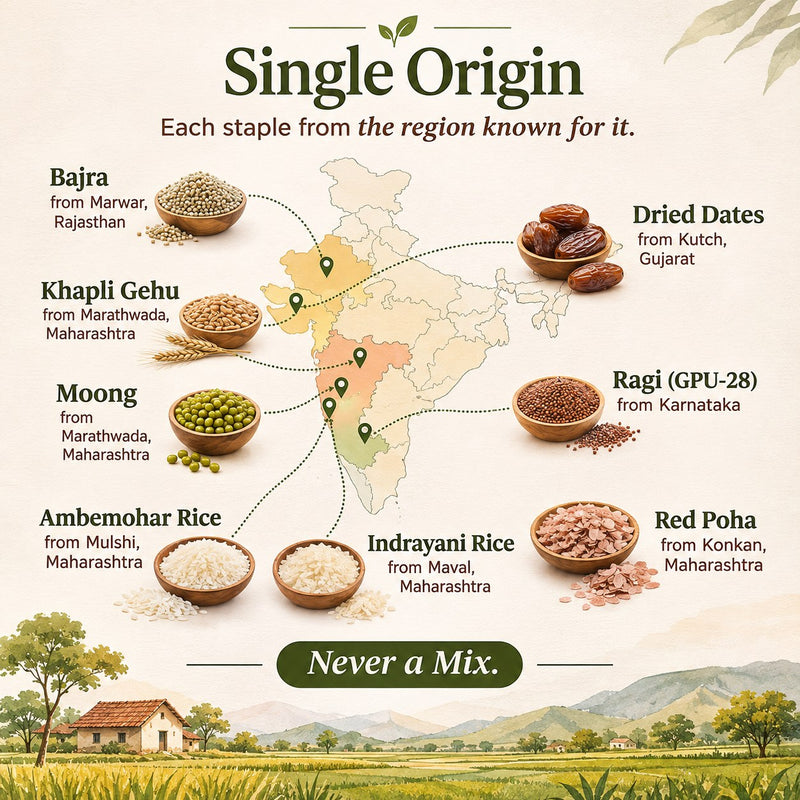
Each staple from the region known for it: Ambemohar from Mulshi, Indrayani from the Maval. Never a mix.
| Feature | Dhatri | Typical packaged staple |
|---|---|---|
| Variety named | Yes — Ambemohar, Indrayani, Khapli | Usually just "rice" or "atta" |
| Where it grew | Region on every pack; farm on passport packs | Rarely stated |
| How it's milled | Hand-pounded or stone-ground | High-speed industrial milling |
| Polish | None — all rice and dals unpolished | Often polished for shine |
| Lab report | Published for you to read | Not shared |
Shop by life stage
The foods Indian kitchens have always turned to at each stage of life — gathered into simple, honest kits.
For mothers-to-be
Simple, home-style staples for the months ahead: ragi, moong, seeds and dates that fit easily into everyday meals.
What's inside

The first 40 days
The traditional baalantpan kitchen: kharik, jaggery, almonds and khapli for the ladoos and sheera our grandmothers made.
What's inside

Ages 1–3
First family foods: sprouted ragi satva, soft moong chilla, poha and idli, made from single-origin staples.
What's inside

Ages 4–12
Lunchbox and after-school favourites: thalipeeth, poha, roasted chana and makhana.
What's inside

For everyday millet meals
Millet, rajgira and rice flours for bhakri, rotis and dosas, the way Maharashtrian kitchens have always used them.
What's inside

Whole grains, the old way
Swap polished rice and maida for whole millets, khapli and besan, the way everyday meals used to be cooked.
What's inside
Food guidance from tradition, not medical advice. Please check with your doctor for your own needs.
Answer a few questions and get a monthly pantry list with quantities.
Answer a quick questionnaire about your household, and we'll help you pick the right, traceable staples to add to your kitchen.
Food guidance, not medical advice.
Get a simple monthly food plan with our most-loved Dhatri staples, seasonal picks, and ideas to make daily meals nourishing, natural and easier to plan ahead.
“I have been purchasing regularly from Dhatri for the past 8-9 months, and I am very happy to have found such an honest and trustworthy brand. They consistently provide quality products with complete transparency, all at reasonable prices. Highly satisfied with my experience.”
“Having tried many of their products over the past few months, Dhatri is my one-stop solution to all staples and groceries needs in my kitchen. Value for money, great packaging, thoughtful brand...”
“Tasty and soft. Good quality, tasty and soft with natural wheat aroma.”
A note from our founder
“While preparing to become a mother, I started asking what was really in the atta, rice and dal we eat every single day. A burger is occasional. Staples are lifelong.”
I couldn't find one brand I could trust for all of them, so I built it. Dhatri means Mother Earth.
— Snehal Madne, Founder
Each staple comes from the region known for it — Ambemohar rice from Mulshi, moong from Marathwada. Region and variety are on every pack; passport packs name the farm and harvest.
Hand-pounded rice is dehusked with a traditional pestle instead of a polishing machine. Stone-ground flour is milled slowly between stones in small batches.
Yes — on each product page, in our Lab Reports library, and through the QR on passport packs.
We don't hold or claim organic certification. We tell you exactly where each product comes from and how it's processed, and publish lab reports so you can judge for yourself.
Airtight, in a cool, dry place. Each pack carries its packed date and best-before date.

Region, variety and harvest on the pack
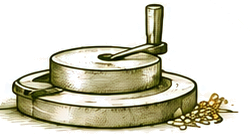
Hand-pounded, stone-ground, slow

Reports published, not promised
Each grain from where it grows best


